
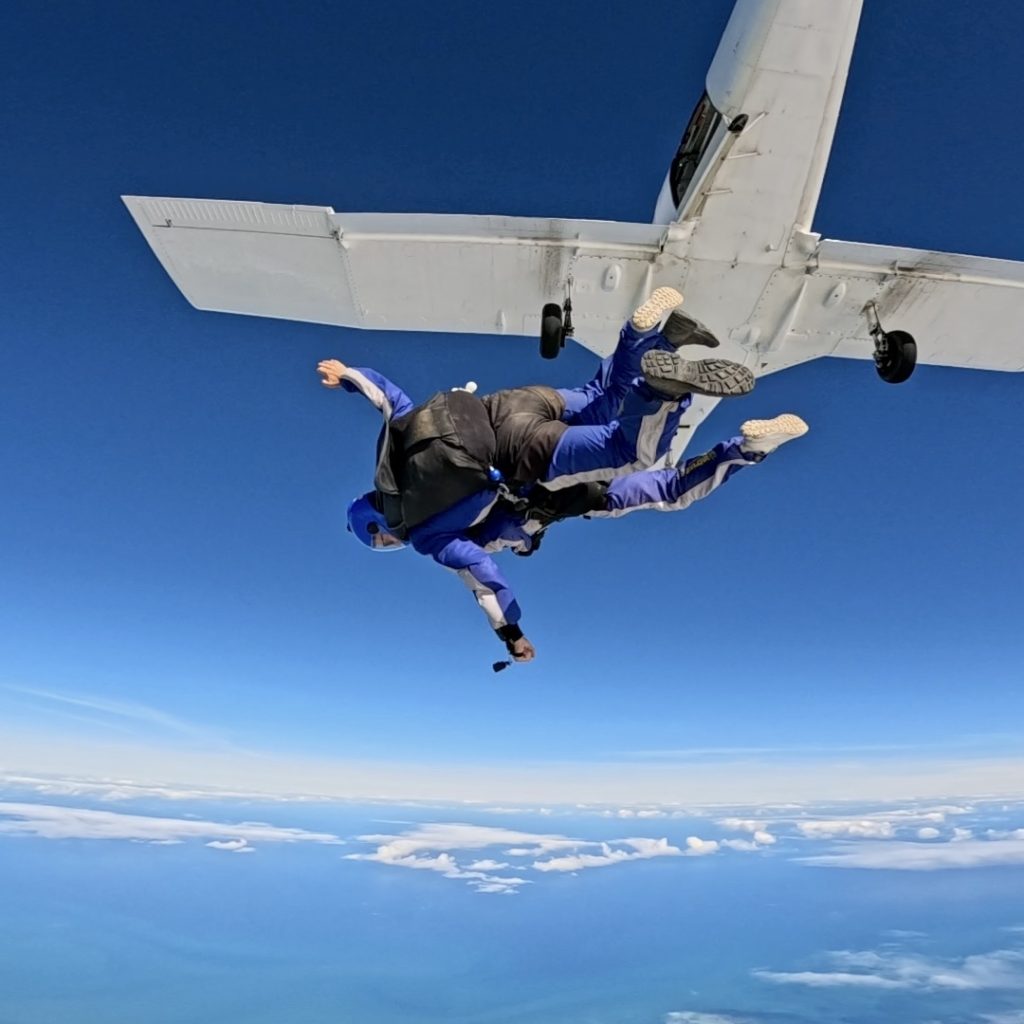
How safe is tandem skydiving in New Zealand?
Yes. Tandem skydiving in New Zealand is a highly regulated activity, with extensive safety procedures, qualified instructors and multiple layers of backup built into every jump.
If you’re considering your first skydive, it’s completely normal to have questions about safety. What happens if the parachute doesn’t open? What qualifications does your instructor have? What happens if the weather changes?
These are all important questions, and there is a lot of safety behind a tandem skydive. At Skydive Auckland, your safety is our highest priority from the moment you arrive until you land safely back on the ground.
How safe is tandem skydiving in New Zealand?
Tandem skydiving is regulated by the New Zealand Civil Aviation Authority (CAA) under the country’s adventure aviation rules. These regulations set requirements for tandem instructors, parachute equipment, aircraft operations, maintenance, weather conditions and operating procedures.
The New Zealand skydiving industry is also supported by NZ Skydiving, the New Zealand Parachute Industry Association (NZPIA), which promotes safety, training and professional standards across the industry.
This means there are strict standards behind every part of your skydive, rather than safety being left to individual operators to decide.
You’re in the hands of an experienced tandem instructor
You don’t need any previous skydiving experience to make a tandem jump. You’ll be securely attached to a qualified tandem master who is responsible for managing the skydive, including the exit from the aircraft, freefall, parachute deployment, canopy flight and landing. Tandem masters must meet specific qualification, medical and experience requirements under New Zealand’s aviation regulations.
Before your skydive, you’ll receive a safety briefing when you arrive at our centre, where our team will explain everything you need to know and show you what to do. Your tandem instructor will then be with you throughout the experience, from getting ready to exit the aircraft through to landing.
What happens if the parachute doesn’t open?
A tandem system has two parachutes: a main parachute and a reserve parachute.
The reserve parachute is a fully regulated part of the tandem system. It must meet the required technical standards and be regularly inspected, maintained and repacked by appropriately qualified parachute technicians. If there is ever a problem with the main parachute, the tandem master has a reserve parachute available.
What is an AAD?
Tandem parachute systems also use an Automatic Activation Device (AAD) on the reserve parachute. An AAD monitors altitude and descent conditions and is designed to activate the reserve parachute automatically if its activation conditions are met. It provides an additional layer of protection alongside the tandem master’s training and the two-parachute system.
How is skydiving equipment maintained?
Skydiving equipment is subject to strict maintenance requirements in New Zealand. Parachutes, harnesses and other safety equipment must meet prescribed standards and be maintained according to the required maintenance programme. Reserve parachutes are also inspected and repacked within the required timeframe.
At Skydive Auckland, equipment checks and maintenance are an everyday part of our operation.
What happens if the weather isn’t safe?
Weather plays a huge role in skydiving. Our team continually assesses conditions including wind, cloud, visibility and other factors that could affect the safety of a jump. If conditions aren’t suitable, we don’t jump.
That can sometimes mean a delay or rescheduled skydive, which we know can be disappointing when you’re excited and ready to go. But making the call to wait for better conditions is an important part of operating safely.
What about an 18,000ft skydive?
Skydive Auckland offers tandem skydives from 13,000, 16,000 and 18,000 feet, with our 18,000ft jump being the highest tandem skydive in New Zealand.
High-altitude skydiving has additional requirements under New Zealand aviation regulations, including requirements around supplementary oxygen for certain operations. So while you’re enjoying the extra altitude and incredible views, the operation behind your jump is working within the requirements that apply to high-altitude skydiving.
Our highly experienced team
One of the most important parts of safety is the people behind the operation. We’re proud to have team members with more than 20 years of experience in the skydiving industry, bringing decades of knowledge and practical experience to what we do. Many of our staff also hold Diplomas in Commercial Skydiving, reflecting the professional training and expertise within our team.
Our staff complete regular proficiency checks across the roles they perform, along with refresher training throughout the year. We also stay connected with experienced professionals across the international skydiving industry to continually review and improve our practices.
Recognised for our safety standards
Skydive Auckland is a CAA Part 115 certificated adventure aviation operator, operating within New Zealand’s regulatory framework for adventure aviation. Skydive Auckland is also part of NZ Skydiving, the New Zealand Parachute Industry Association, which supports safety, training and professional standards across the New Zealand skydiving industry.
We’re also proud to hold Gold Qualmark accreditation, New Zealand’s official tourism quality mark. Our Qualmark evaluation has recognised our safety practices as industry-leading and best practice.
What can you expect on the day?
From the moment you arrive at Skydive Auckland, our team will guide you through the process. You’ll receive your safety briefing, meet your tandem instructor, get fitted with your equipment and be given clear instructions before heading into the aircraft.
Once you’re in the air, your instructor takes care of the technical side of the skydive. Your job is simply to follow their instructions and enjoy the freefall, the views and the experience.
It’s completely normal to feel nervous. In fact, we’d be surprised if you didn’t. But knowing that you’re jumping with a qualified and experienced team, using carefully maintained equipment and within a highly regulated aviation environment can make a huge difference.
So, is tandem skydiving safe?
Tandem skydiving carries inherent risk, but New Zealand has strict regulations and safety systems in place to manage those risks, and Skydive Auckland takes that responsibility seriously. From qualified tandem masters and regularly maintained equipment to reserve parachutes, AADs, weather assessments and an experienced team, there are multiple layers of safety behind every jump.
Ready to experience it for yourself?
Experience New Zealand’s highest tandem skydive from up to 18,000 feet with Skydive Auckland.
Book your skydive
FAQ
Tandem skydiving carries inherent risk, but it is a highly regulated activity in New Zealand. Qualified tandem instructors, regularly maintained equipment, reserve parachutes, Automatic Activation Devices (AADs) and strict weather procedures all provide multiple layers of safety throughout the experience.
A tandem skydive uses two parachutes: a main parachute and a reserve parachute. If there is a problem with the main parachute, the reserve is available as a backup. Tandem systems also use an Automatic Activation Device (AAD), which can automatically activate the reserve parachute if its activation conditions are met.
Skydiving in New Zealand is a highly regulated activity. The Civil Aviation Authority (CAA) sets the rules for tandem skydiving, including requirements for instructors, equipment, maintenance and operating procedures. The industry is also supported by NZ Skydiving, the New Zealand Parachute Industry Association (NZPIA), which promotes safety, training and professional standards across the New Zealand skydiving industry.
If weather conditions aren't suitable for a safe skydive, the jump may be delayed or rescheduled. Wind, cloud, visibility and other conditions are assessed by the team before and during operations to ensure jumps can be conducted safely.
Skydive Auckland has been operating in the skydiving industry for more than 20 years, with experienced tandem instructors and a team of highly trained professionals. Tandem masters must meet specific qualification and experience requirements under New Zealand aviation regulations, and our team completes regular proficiency checks and refresher training.
Skydive Auckland is a CAA Part 115 certificated adventure aviation operator and is listed by the Civil Aviation Authority as a certified operator. We also hold Gold Qualmark accreditation and are proud members of the New Zealand Parachute Industry Association (NZPIA). Our Gold Qualmark assessment recognises best-practice performance in areas including health and safety and training.